
Most business owners I talk to already know they need to be using AI. What stops them is not a lack of interest. It is fear.
Fear of picking the wrong tool. Fear of wasting money. Fear of making things worse before they get better. I get it. I battle this fear every day.
Ten years ago, I lived in Austin, mixing sound at jazz clubs. It is a city that has always believed creativity and technology belong in the same room, and coming back for the Vistara AI Conference felt like the right place to have this conversation.
I brought four of our twelve team members with me. Vistara was our first conference together, and it was no accident.
We kayaked Lady Bird Lake on day one, ate suadero tacos, and stayed up late talking with other agency leaders about the future of this work. We left more connected to each other and more aligned on what we are building.
Building the Agency of the Future
At the center of everything we are building at Lasso Up are people.
AI does not work without them. Our commitment to bringing the team to Vistara was a direct extension of our commitment to training them, investing in their growth, and building something together.
You cannot build an AI-first agency by handing your team a tool and walking away.
Since we started embedding AI into our workflows, we have tripled our content output with better quality and a less burned-out team. That did not happen by accident. It happened because we made a plan, invested in the people to work it, and kept building.
What I found in that room alongside three hundred leaders was a lot of ambition and one shared question:
We know AI matters, but what exactly do we build, where do we start, and how do we actually get our teams to use it?
The Problem Nobody Wants to Admit
The challenge is not awareness. Everyone knows AI matters. The gap is between knowing it and actually building something with it.
The Real Obstacle Isn’t the Technology
What I hear most is fear. Fear of picking the wrong tool and wasting money. Fear of overwhelming a team that is already stretched. Fear of committing to something that will look completely different in six months. That fear is real, and it is keeping many capable people on the sidelines longer than they should be.
This Is That Kind of Moment
Businesses sitting on the sidelines with AI are making the same bet as those who ignored the internet. Some of them figured it out eventually. A lot of them did not make it. This is that kind of moment.
The fear does not have to stop you. But it will, without a plan.
Some teams have subscriptions. A few people on the team are using ChatGPT or Claude regularly. But a coherent plan that defines what to build, how to build it, who owns it, how to train the team, and how to measure progress? That is rare.
Pushing Doesn’t Work. Leading Does.
Executives are telling their teams to “just do it with AI” without providing any training, guidance, or room to figure it out. The mandate comes down. The tools get purchased. And then nothing changes. Or worse, something breaks.
When people are pushed into a technology they do not understand, without support and without permission to fail, they do not lean in. They protect themselves. They find ways to appear compliant while quietly going back to how they have always worked.
The technology that could make their lives easier becomes the thing they most want to avoid.
That is an AI change management failure, not a people problem. And it is happening everywhere right now.
AI is not a tool problem. It is a leadership problem. The businesses that figure this out first will build advantages that compound for years.
David C. Baker, a highly respected advisor who has spent decades studying the agency business, put the pressure into perspective at Vistara. He observed that AI is moving so fast that it can feel nearly impossible to keep up with while also running a business. The expectation that any leader can stay on top of every development is unrealistic.

His point was not to add to the anxiety. It was to remove it.
Nobody knows exactly where this is all going. Get moving, build something, learn from it, and keep going.
What the Best Leaders in the Room Are Building
The speakers at Vistara brought frameworks and real-world examples from within agencies already being built. Three stuck with me the most.
| Brent Weaver | AI does not replace your team. It multiplies them. |
| Britney Muller | Only 10% of businesses are actually building with AI. If you are experimenting, you are already ahead. |
| David C. Baker | Reinvent yourself before someone else does. That responsibility starts with the leader. |
Here is what each of them said, and why it mattered.
Brent Weaver: The Agentic Agency
Brent is the CEO of E2M and has been a consultant and coach to Lasso Up for years. He has a rare ability to see where things are headed before most people can.
His framework: the business of the future does not replace people with AI. It multiplies them. Every team member is supported by an AI agent that handles execution, freeing the human to focus on strategy, creativity, and relationships. The goal is 10x productivity, not reduced headcount.
More with the same people, not fewer of them.
Britney Muller: The AI Execution Gap

If you are experimenting at all, you are already ahead of 90% of the field. That is not an excuse to slow down. It is permission to stop feeling behind and start building.
Britney’s concept: ship the ugly V1, learn from it, and iterate. Innovation does not happen through perfection. It happens through failure that is safe to make.
David C. Baker: Get on the Bus
Baker gave the philosophical backbone of the conference. He framed AI through a simple model: every business has a strategy room and an execution room. AI’s most powerful application is handling the repetitive, time-consuming work that absorbs the energy of your best people.
When AI takes over more of that execution, your team gets back the time and mental space to do what humans are genuinely best at: thinking, creating, and deciding.
His challenge was direct. Reinvent yourself before someone else does it for you. That responsibility starts with the leader, not with the team and not with the tools.
Recreate yourself before someone else does.
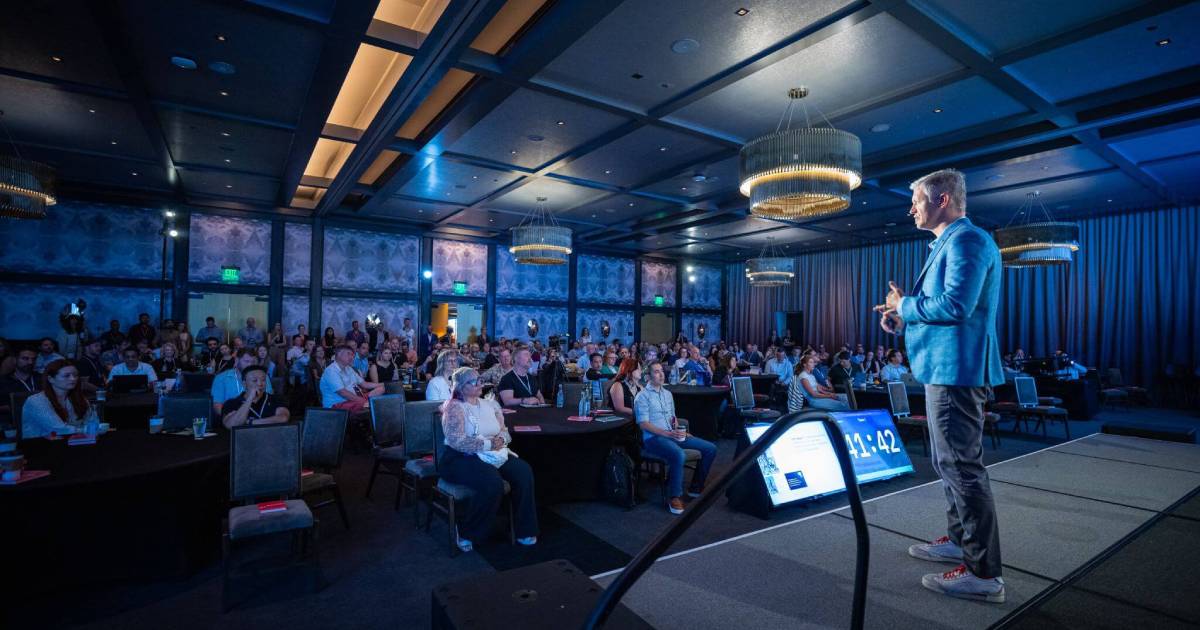
I spent two days absorbing all of this from the audience. Then I was asked to step on stage.
What I Shared on Stage, and What I Got Wrong First
Being on the Q&A panel at Vistara was an honor. This was a room full of people who have built more with AI than I have. Representing Lasso Up alongside Brent, a close friend and one of the most important mentors in my career, made it feel even more significant.
The question I was asked: “What are the biggest challenges you have run into with AI?”
My answer started with a confession.

I attended the first Vistara conference the year before. I came home fired up, full of ideas and urgency, ready to change everything. And I made a mistake, I now see leaders making mistakes everywhere.
I pressed my team too hard, too fast, without a clear plan.
I had not thought carefully about what I was asking them to do. I had not given them the training. I had not created space for them to fail while they figured it out.
I had good intentions and genuine excitement, but I didn’t lead the change effectively. I announced it and expected it to happen.
Nothing happened the way I expected.
I had good intentions and genuine excitement, but I did not lead the change well. I just announced it and expected it to happen.
It’s Not Just My Story
This is the same story playing out at companies of every size right now. Leaders feel the urgency, go back to their teams, and say, “We need to be using AI.”
No roadmap. No training. No clear expectations.
The team nods, tries a few things, gets frustrated, and quietly goes back to how they have always worked.
Neither side is wrong. The leadership approach is.
For leaders, reinvention means learning the tools yourself before asking your team to learn them. It means building fluency, developing a point of view, and then showing people a new way forward rather than telling them to find it on their own.
That hard lesson became the foundation for the plan we are now building at Lasso Up.
The 3-Step AI Adoption Roadmap
Here is the approach we are using at Lasso Up to move from occasional AI use to an AI-first operating model, without burning out the team.
- Become Superhuman
- Build Training Resources
- Build Habits
Here is what each one looks like in practice.
Step 1: Become Superhuman
The leader goes first. You cannot ask your team to change how they work if you have not changed how you work.
Start with what I call the “I hate” list. Write down every task you do repeatedly each week that drains your energy without adding strategic value.
The meetings you dread summarizing. The reports you hate pulling. The emails you have written a hundred times. These are your first AI projects, not because they are the most important, but because your motivation to solve them is highest and the wins come fast.
Try this:
|
Once you start seeing what these tools can actually do, you will begin seeing problems differently. The gap between what most people think AI can do and what it actually can do is enormous. You need to see it before you can lead it.
Step 2: Build Training Resources
Personal fluency is the foundation, but the goal is a team that builds with AI, not just a leader who does.
Once you have put in the work yourself, the next step is building the systems that bring everyone else along.
- Document your workflows.
- Create a training presentation that gives everyone a map of how AI fits into the business.
- Teach your people to think like AI architects, not just AI users.
The distinction matters. An AI user knows how to use a tool. An AI architect knows how to identify a problem, design a solution, and build the tool that solves it. That second capability is where the real compounding begins.
Step 3: Build Habits
You can have great tools and great training, and still watch your team drift back to old patterns within a month. Steps 1 and 2 build the capability. Step 3 is what makes it stick.
Training gets people started. Habits keep them going.
The simplest habit I have introduced at Lasso Up is an acronym I created: W.A.I.T., which stands for “Would AI Improve This?” Before starting any task, pause and ask the question. Short enough for a sticky note. Easy enough to become automatic. It is now on desks across our team.
| Write This Down Write “W.A.I.T. – Would AI Improve This?” on a sticky note and put it on your monitor. Before starting any task this week, ask the question. |
What Winning Looks Like
The goal is not a smaller team or a cheaper team. It is a team of superhumans. People who spend most of their time on the work that actually requires them: the strategic thinking, the creative decisions, the client relationships, no AI can replicate.
The productivity gains compound. The first tool you build saves thirty minutes a week. That time lets you build a second tool. The curve starts flat and bends sharply upward, mirroring the effect of compound interest on the way your team works.
Here is what that shift looks like in practice.
| Area | Before AI | After AI |
| Meeting follow-up | Manually reviewing notes, writing recaps, assigning tasks. 30 min to 2 hours per meeting. | AI generates the recap, pulls action items, drafts follow-up, assigns tasks. Review and approve in under 5 minutes. |
| Content production | Hours spent researching, drafting, editing, and formatting every piece from scratch. | AI handles research, first drafts, and formatting. Team focuses on strategy, messaging, and quality review. 3x output at Lasso Up. |
| Reporting and data pulls | Manually pulling data from multiple platforms, compiling into documents, and formatting for clients. Repetitive and time-consuming. | AI pulls, compiles, and formats. Team adds strategic context and client commentary. Same quality, fraction of the time. |
| Admin and routine emails | Writing the same types of emails and updates over and over. Low value, high frequency, and draining to do well. | AI drafts routine communications in seconds. Team reviews, personalizes, and sends. Mental energy saved for work that actually requires it. |
| Strategic work and creative thinking | Squeezed into whatever time is left after admin, reporting, and follow-up. Often rushed or deferred entirely. | The default, not the exception. Team spends more time on the work they are actually best at and most energized by. |
| Team burnout | High. Talented people spending most of their day on low-value, repetitive work that does not use their skills. | Meaningfully lower. When people spend more time on work they are good at and less time on work that drains them, the difference shows. |
At Lasso Up, we are living this shift. What started as small executive assistant tools saving individuals an hour here and there has grown into an infrastructure that is changing how the whole team operates. That is the direction every business is heading.
Let’s Talk AI
If there is one thing I want you to take from this post, it is that fear is normal, and the plan is learnable.
I have watched a 12-person team go from dabbling to building real systems in less than a year. It is not magic. It is the three steps above, done consistently.
If you want to talk through where to start for your business, book a connect call. No agenda, no pitch. Just a conversation about what you are building and where AI could actually help.
Thirty minutes. Clear next step.
I share ongoing AI insights, frameworks, and real examples from what we are building at Lasso Up on LinkedIn. If this was useful, follow along.
Not ready to book a call yet?