
Most businesses do not wake up one day and decide to create marketing chaos. It usually happens slowly.
A few campaigns get launched. A website gets updated. A paid ad test gets added. A few blogs go live. A new offer gets introduced. On paper, there is plenty of marketing activity.
But the results still feel uneven. Leads come in waves. Sales conversations feel inconsistent. The website gets traffic, but not enough conversions. The team is busy, but no one can clearly explain what is working, what is wasting budget, or what should happen next.
That is the difference between buying marketing services and building a growth system.
Most businesses do not need more disconnected tactics. They need growth marketing systems that integrate strategy and execution into a single structure designed to attract, nurture, and convert the right customers.
More Marketing Activity Does Not Always Mean More Growth
When growth slows down, many businesses assume the answer is more. More content. More ads. More social posts. More landing pages.
Sometimes, more activity helps, but activity alone is not a strategy. A business can invest in a new website, run paid ads, write blogs, and post on LinkedIn without creating real momentum. If those pieces are not connected to a larger growth plan, each one has to carry too much weight on its own.
That is where marketing starts to feel scattered.
A campaign might generate clicks, but the landing page may not convert. A blog might bring in traffic, but there may be no clear next step for the reader. A refreshed brand may look better, but the messaging may still fail to explain why buyers should care.
One-off services can create useful assets. But without a system, those assets often sit in separate lanes. They do not build on each other or create a repeatable path from attention to trust to revenue. Growth requires structure.
What Is a Growth Marketing System?
A growth marketing system is the connected framework that turns marketing activity into measurable business growth. Instead of treating each piece as a separate project, a growth system gives every piece a clear role.
The goal is not to simply get more traffic or launch more campaigns. The goal is to create a repeatable path that helps the right people find the brand, understand the value, take action, and turn into qualified opportunities.
A successful growth marketing system helps a business answer important questions:
- Who are we trying to reach?
- What problems are we solving?
- Why should buyers choose us?
- Where are qualified leads coming from?
- What happens after someone shows interest?
- Which channels are producing real opportunities?
- What should we improve next?
Without those answers, marketing becomes reactive. With those answers, marketing becomes easier to manage, measure, and improve.
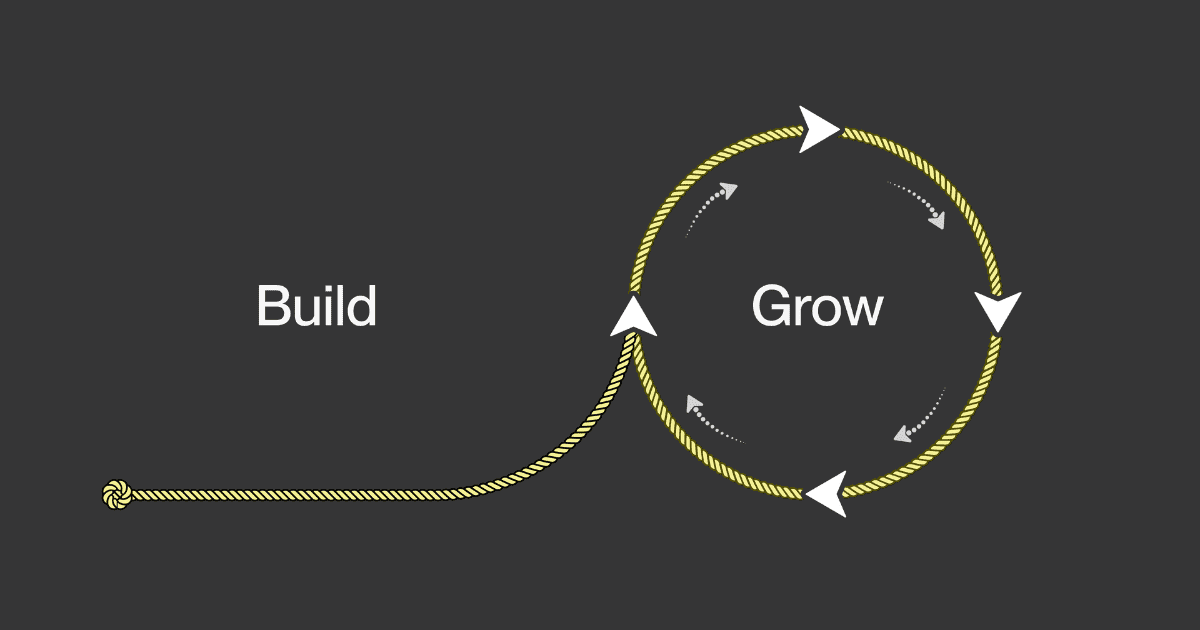
At Lasso Up, this process is built around two connected phases within the growth cycle:
- Building the right foundation first
- Creating consistent momentum through ongoing marketing execution.
In our experience, businesses that skip the foundational phase often struggle to scale efficiently because the underlying system supporting their marketing is not fully aligned.

Strong Foundations Have to Come Before Scale
Many businesses try to scale before their foundation is ready. They send more traffic to websites that are not built to convert, invest in campaigns before their messaging is clear, and publish content before the brand has a strong point of view. That creates pressure without progress.
Before growth can become consistent, the foundation has to be strong enough to support it. Businesses need structure before they can scale effectively.
This is why growth systems operate in phases:
- Phase 1 focuses on the foundation: positioning, messaging, conversion strategy, website performance, and customer journey alignment.
- Phase 2 focuses on scale: visibility, lead generation, optimization, and long-term growth momentum.
When the foundation is strong, growth efforts have somewhere to go:
- Campaigns become more focused
- Leads become more qualified
- Decisions become easier because the business has a clearer view of what is working
Strong foundations also make execution more efficient across every area:
- A clear strategy helps teams stop chasing every idea
- A stronger website gives campaigns a better place to send traffic
- Better messaging helps prospects understand the offer faster
- Content, SEO, and ads become more effective because they are all supporting the same goal
Disconnected Services Create Disconnected Results
A service provider delivers a task. A growth marketing team connects tasks to outcomes.
That difference matters.
A company may hire one vendor to write blogs, another to run ads, another to rebuild the website, and another to create sales materials. Each provider may do good work in isolation, but the customer journey can still feel fragmented:
- The blog strategy may not support the paid campaign
- The website may not match the sales conversation
- Ads may drive traffic to pages that were not built for conversion
- Reporting may show clicks and impressions, but not how any of it connects to revenue
This is why businesses often feel frustrated even when they are investing in marketing. They are buying pieces, but the pieces are not working together.
A growth system changes the way marketing is built. Every asset has a job. Every channel has a purpose. Every campaign connects back to a larger plan. Instead of asking “What should we launch next?” the better question becomes “What does the system need next to create better results?”
Growth Systems Connect Marketing, Sales, and Revenue
Marketing does not stop when someone fills out a form. If the lead is low quality, poorly timed, or handed off without context, the business still has a growth problem.
That is why growth marketing systems need to connect marketing and sales. The goal is not just to create more leads. The goal is to create better opportunities with a higher likelihood of converting into customers.
This requires alignment around lead quality, conversion points, and follow-up. Marketing teams need to know which messages are attracting serious buyers. Sales teams need to know where leads are coming from, what they care about, and what action they have already taken.
When the system is working, everyone is looking at the same pipeline. The business can see which channels are generating qualified interest, which offers are converting, and where prospects are getting stuck.
Measurement Turns Guesswork into Better Decisions
Growth systems do not rely on vibes. They rely on feedback.
That means looking beyond vanity metrics. Website traffic, impressions, and clicks can be useful indicators, but they are not the final measure of success. A business needs to know whether marketing is generating qualified leads, improving conversion rates, driving revenue, and delivering a return on investment.
That kind of visibility matters because many marketing teams still struggle to turn engagement and data into action. Salesforce’s State of Marketing report found that while 83% of marketers recognize the shift toward personalized, two-way messaging, only one in four are satisfied with how they use data to support those moments.
The right measurement system helps teams make better decisions. It shows what should be improved, what should be scaled, and what should be stopped.
This is where structure creates momentum. Instead of starting from scratch every month, the business can build on what it has learned. Strategy leads to execution. Execution creates data. Data shapes the next round of improvements.
Over time, that loop becomes one of the biggest advantages of a growth system. Marketing becomes less reactive because decisions are tied to performance, not panic.
| Vanity Metric | Growth Metric | |
| Traffic | Total website sessions or page views | Sessions from qualified audience segments that convert |
| Reach | Impressions and total ad reach | Cost per qualified lead generated |
| Engagement | Likes, follows, and social shares | Click-to-lead conversion rate from social content |
| Activity | Number of blogs published or emails sent | Leads and pipeline generated from content |
| Revenue | Total revenue without attribution | Revenue tied to specific marketing channels and campaigns |
Lasso Up Builds Systems, Not Shortcuts
Ambitious brands do not need another agency that only hands over assets. They need a partner that understands how strategy, brand, website, content, SEO, ads, and reporting work together to create growth.
That is where Lasso Up is different.
Lasso Up is built for founders, operators, and marketing leaders who are tired of scattered execution. The focus is not on chasing quick wins or adding more noise to an already busy marketing calendar. The focus is on building a connected system that gives growth a stronger foundation and a repeatable process.
That includes the strategic work that comes before scale, as well as the ongoing execution needed to generate momentum. The point is not to do marketing for the sake of activity.
The point is to build a system that attracts the right audience, turns attention into action, and gives the business a clearer path to measurable results.
Build a Growth System That Can Keep Up with Your Ambition
If marketing feels busy but inconsistent, the answer may not be another disconnected service. It may be time to look at the system behind the work.
Growth marketing systems give businesses a better way to scale by replacing scattered effort with structure. They create a stronger foundation, a clearer process, and a more measurable path from attention to revenue.
Ready to replace scattered marketing with a system built for growth? Book a strategy call with Lasso Up.